How Provincial Licensing Shapes Customizable Interface Features in Digital Gaming Apps for Slot and Table Play
Written by Anna Koch · Oct 24, 2026
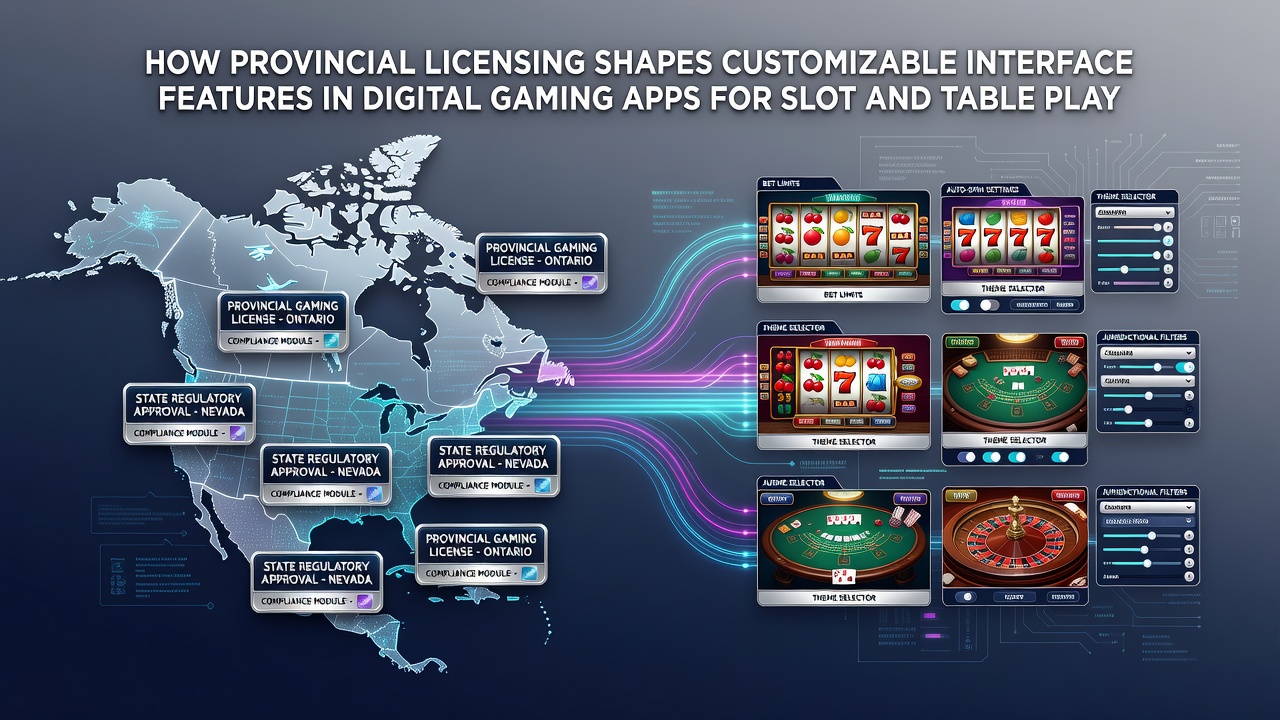
How Provincial Licensing Shapes Customizable Interface Features in Digital Gaming Apps for Slot and Table Play
Provincial licensing regimes across Canada determine the range of customizable interface options available in digital gaming apps for slot and table play, with each jurisdiction establishing distinct technical standards that operators must meet before launch. These requirements often address display configurations, control placements, and personalization tools while maintaining compliance with responsible gaming protocols. Data from regulatory filings shows that operators in multiple provinces adjust app features according to the specific licensing conditions set by bodies such as the Alcohol and Gaming Commission of Ontario and the British Columbia Gaming Policy and Enforcement Branch.
Regulatory Frameworks Across Canadian Provinces
Ontario's licensing model, administered through the Alcohol and Gaming Commission of Ontario, requires apps to incorporate player-selectable display modes that align with self-exclusion and limit-setting tools, and this approach has led developers to build modular interfaces where users adjust bet layouts or theme elements without altering core game logic. Alberta's framework, managed by the Alberta Gaming, Liquor and Cannabis Commission, emphasizes integration with provincial player accounts, which in turn influences how table game apps present customizable dealer perspectives and betting grids. Observers note that these provincial differences create varied customization menus, since each regulator evaluates interface proposals against its own technical specifications before granting operational approval.
Quebec and British Columbia apply additional layers of oversight that focus on accessibility features, such as adjustable font sizes and color contrast options in slot apps, and these mandates connect directly to broader licensing conditions that operators must satisfy during annual reviews. Research indicates that provinces with more detailed interface guidelines tend to see slower rollout timelines for new customization tools, whereas jurisdictions with streamlined approval processes allow faster deployment of player-driven layout changes.
Effects on Slot Game Customization
Slot apps under provincial licenses frequently include options for players to reorder reel configurations or select preferred animation styles, yet these choices remain bounded by rules that prevent any modification from affecting random number generator outcomes. In October 2026, several provinces plan to introduce updated compliance checklists that address dynamic interface scaling for different device orientations, and operators have already begun testing these adjustments in controlled environments. Licensing conditions also require clear visual separation between game controls and responsible gaming prompts, which shapes how developers design toggle switches for sound levels and spin speeds.
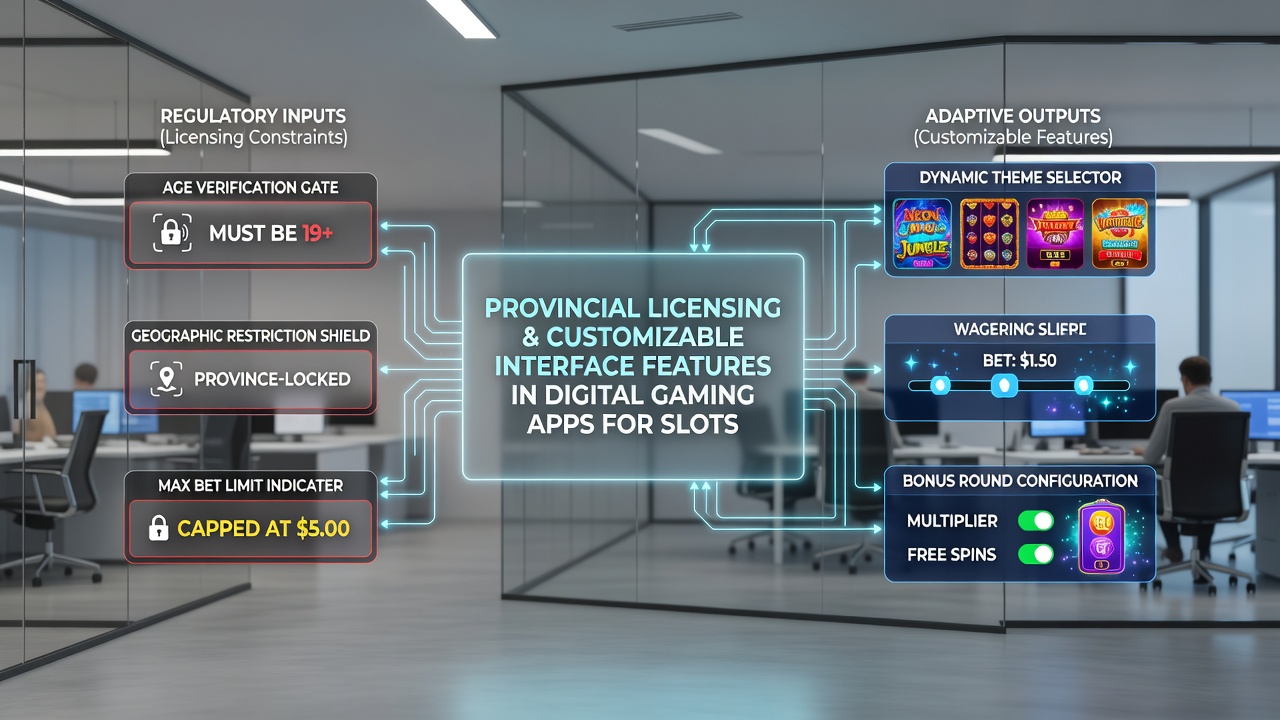
Table Play Interface Adaptations
Table game apps face distinct constraints because provincial regulators often require persistent display of betting history and limit reminders within customizable views, and this leads to interface designs that embed these elements in fixed positions even when players rearrange other screen components. One study from a Canadian research institution revealed that apps licensed in multiple provinces maintain separate code branches to accommodate differing rules on multi-hand blackjack layouts and roulette wheel perspectives. Those who have examined compliance reports note that table play customization tends to emphasize community features, such as shared chat overlays, only when the licensing authority has pre-approved the underlying data handling protocols.
Provinces continue to refine their approaches, and recent updates have begun linking interface approval to real-time monitoring capabilities that track how often players modify their display settings. This connection encourages developers to include logging mechanisms that feed directly into provincial oversight systems without exposing personal data beyond what the license permits.
Cross-Provincial Comparisons and Emerging Patterns
Comparisons between Ontario and Alberta show that the former permits broader color and theme customization in slot interfaces while the latter restricts changes to functional elements only, and these variations stem from each province's interpretation of player protection requirements. A report published by an Australian gambling research center examined similar licensing models and found that regional differences in interface rules can increase development costs by 15 to 25 percent when operators expand across borders. Industry associations tracking these trends report that developers increasingly rely on configurable content management systems to meet multiple provincial standards within a single app codebase.
By October 2026, additional provinces are expected to align certain interface standards around common accessibility benchmarks, and this convergence may reduce the need for entirely separate builds while still preserving each jurisdiction's authority over responsible gaming elements. Data from licensing applications indicates that operators who invest early in flexible interface architectures experience faster approval cycles in newer markets.
Conclusion
Provincial licensing continues to define the boundaries of customizable features in digital gaming apps for slot and table play through detailed technical and compliance requirements. Operators adapt their designs to satisfy these conditions, resulting in interfaces that reflect both player preferences and regulatory priorities. As provinces update their frameworks through 2026, the interplay between licensing rules and interface development will likely produce further refinements in how apps present options for personalization while maintaining consistent oversight across regions.